Industry
Accounting
Company
Contabilizei
Onboarding & company migration
Redesigning the onboarding experience for customers opening a new company through Contabilizei.
Overview
Opening a company in Brazil is rarely a straightforward process. Multiple teams, legal requirements, and operational dependencies often happen in parallel, making it difficult for customers to understand what is happening and what comes next.
At Contabilizei, research consistently revealed the same frustration: customers felt lost during onboarding. They weren’t sure which stage they were in, what actions were being taken behind the scenes, or when they could expect progress.
My goal was to make the process more transparent without oversimplifying the operational complexity behind it.
Impact
15% reduction in contact rate during onboarding
20% reduction in NPS detractors related to communication during company setup
A scalable onboarding framework adopted across different company types and different cities
Understanding the challenge
The onboarding experience was built around internal operational workflows rather than customer understanding.
Behind the scenes, tasks were managed through Jira and executed by multiple teams. Depending on the customer’s location, different legal requirements, deadlines, and dependencies applied. Several activities could progress simultaneously, while others depended on customer action.
As Contabilizei expanded into new markets, these differences became increasingly difficult to communicate through a single onboarding experience.
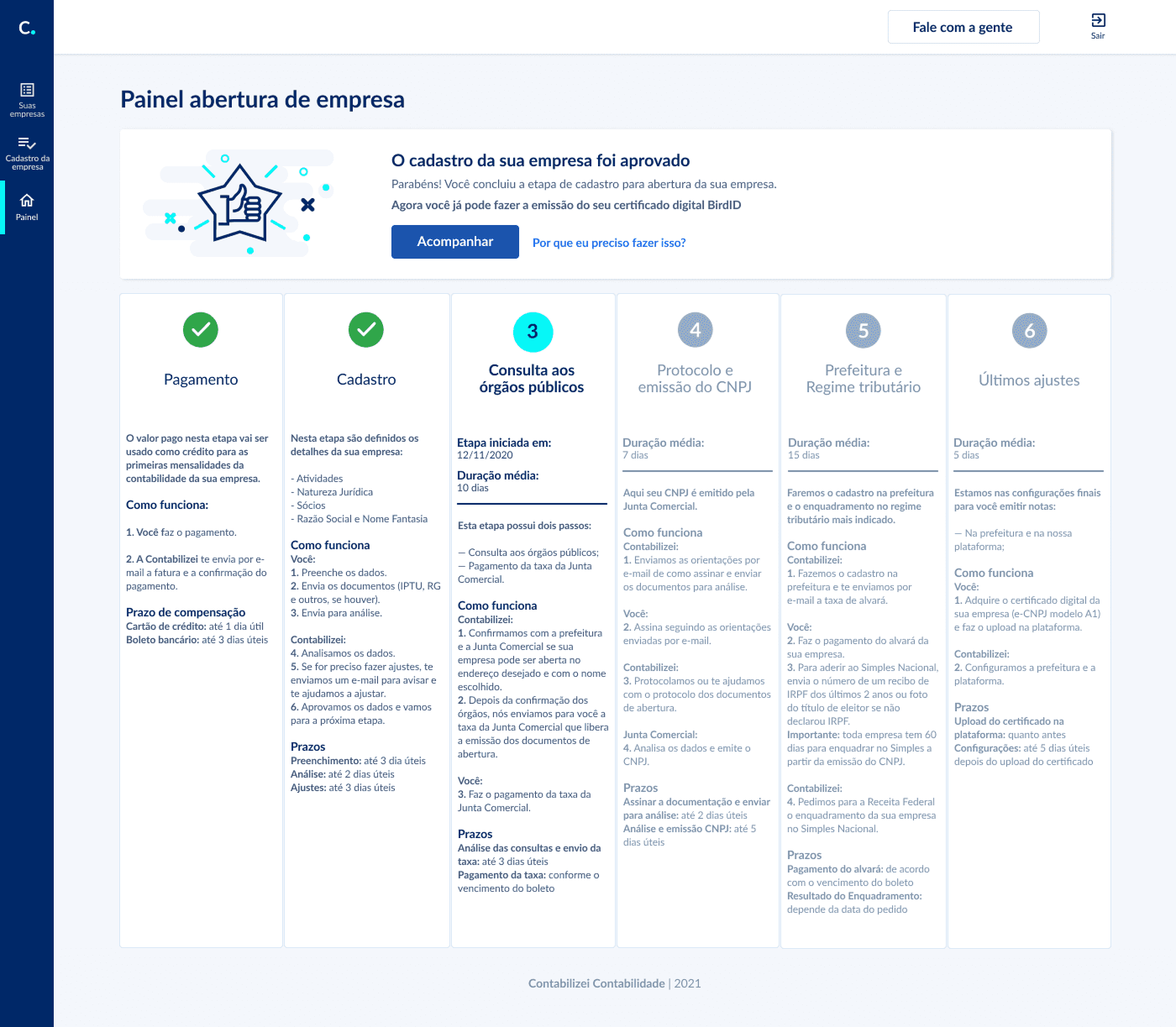
Our starting point, the old onboarding experience. Bloated, complicated, not scalable.
Translating operations into a customer experience
The challenge wasn’t simply showing progress. It was helping customers understand what was happening without exposing the complexity of the underlying process.
Instead of treating onboarding as a checklist, we reframed it as a process with multiple parallel workstreams. This led to three guiding principles:
Make progress visible at all times.
Set expectations whenever a reliable deadline exists.
Reflect the reality of the process rather than forcing it into a linear flow.
Simplifying complexity
To achieve our goals while following the defined principles, we mapped internal statuses to a simplified set of customer-facing states and organized the experience around reusable step cards. Each card answered four questions:
What is happening?
What is the current status?
Is there anything I need to know?
Do I need to take action?
This approach allowed us to represent parallel workstreams without overwhelming users with operational details.
To make the interface easier to scan, we combined status indicators, visual cues, contextual messages, and recommended actions within each step. Rather than relying on a single progress metric, users could quickly understand which tasks were in progress, which required attention, and which had already been completed.
The card structure also gave us a scalable way to translate internal operational states into a consistent customer experience across different markets and onboarding scenarios.
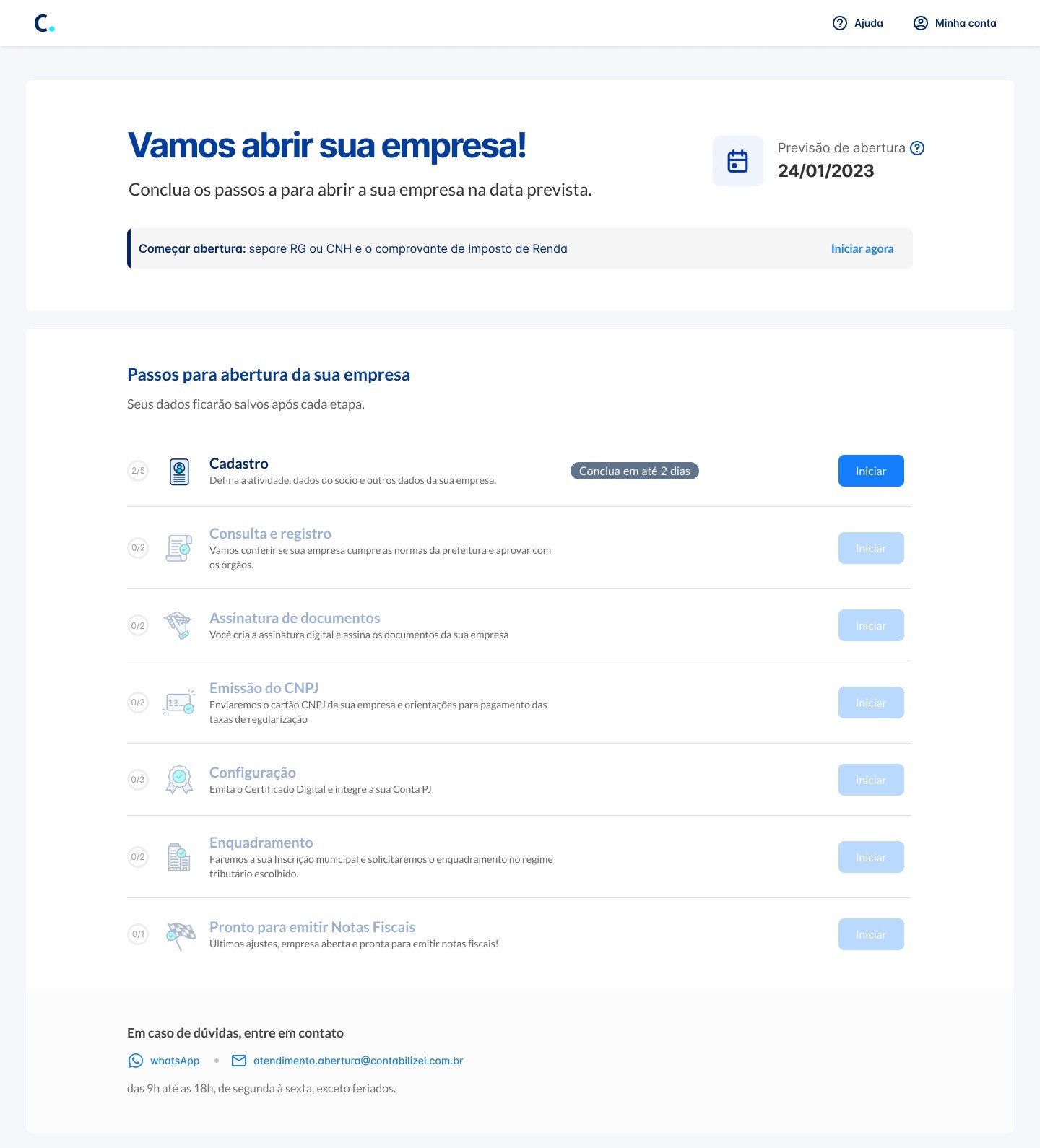
An overview of the new onboarding experience
To make the interface easier to scan, we combined status indicators, visual cues, contextual messages, and recommended actions within each step. Rather than relying on a single progress metric, users could quickly understand which tasks were in progress, which required attention, and which had already been completed.
The card structure also gave us a scalable way to translate internal operational states into a consistent customer experience across different markets and onboarding scenarios.


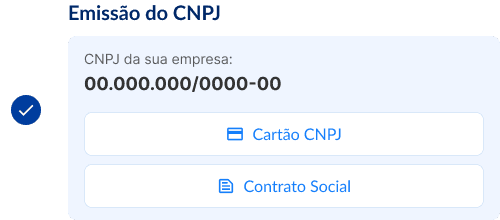
Same step, different states. Our goal is to show exactly what the user needs.
Adapting the framework to different scenarios

Providing realistic timelines
Whenever reliable operational data was available, we surfaced an expected company opening date along with contextual information about factors that could influence that estimate.

Highlighting blockers
Some onboarding steps could not progress until customers completed a required action. In these situations, the interface intentionally increased the visibility and urgency of the recommendation.
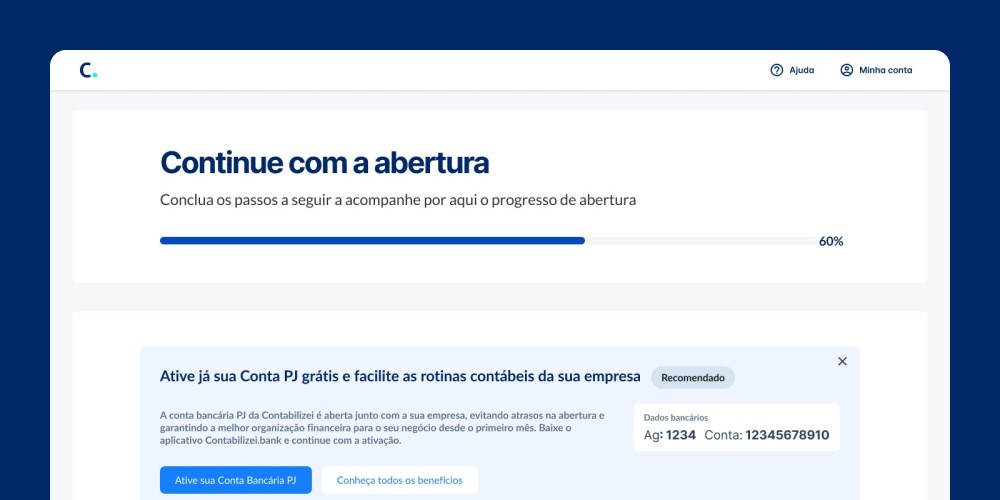
Designing for uncertainty
Reliable completion dates weren’t always available — certain steps depend on external factors outside our operational control. For these cases, we designed a percentage-based progress alternative. Less precise than a date, but it still reduced uncertainty and allowed the framework to scale to flows where date forecasting simply wasn’t possible.

Supporting growth opportunities
The onboarding framework also had to accommodate cross-sell pressure from internal teams. Rather than blocking it entirely, we identified one contextually relevant offer — virtual address — that genuinely fit the moment of company creation, and designed it in a way that didn’t compete with the primary task.
We also defined internal rules and made it easier to accommodate future cross-sell opportunities during the onboarding process.
Outcome
The final solution gave customers a clearer understanding of where they were in the company creation process, what was happening behind the scenes, and what actions required their attention.
Rather than presenting onboarding as a rigid sequence of steps, the experience reflected the reality of the operation: multiple tasks progressing simultaneously, each with its own status, dependencies, and expected outcomes.
The approach also created a reusable framework that could adapt to different markets and operational scenarios without requiring a complete redesign.
Following rollout, the experience contributed to a 15% reduction in onboarding-related contact rate and a 20% reduction in NPS detractors associated with communication during company setup.